

Last Updated: November 19, 2026
Quick Summary
To calculate quilt fabric yardage, first find the fabric width, usually 42 inches on a bolt of quilting cotton. Then add seam allowances, count how many strips fit across the width, divide by strips per yard, and round up to the nearest eighth of a yard.
- Standard quilting cotton is usually 42 inches wide before washing.
- Add 1/2 inch to each side of every block for seam allowances.
- A Queen-sized quilt top typically needs about 9 yards of fabric.
- For backing, add 8 inches to both the length and width of the finished top.
- Binding usually needs roughly 1/3 to 1/2 yard for an average quilt.
Table of Contents
- Step-by-Step: Calculating Yardage for a Quilt Top
- How to Calculate Quilt Backing Yardage
- Quilt Backing Yardage Chart and Binding Calculator Tips
- Frequently Asked Questions
Getting your quilt fabric yardage right starts with one number: the width of the fabric on the bolt. Most quilting cotton comes in 42-inch wide bolts, and each yard of that fabric gives you 1,512 square inches of usable area, calculated as 36 inches by 42 inches.
Width of fabric, often shortened to WOF, is the measurement you need before you do anything else. Selvages are the tightly woven edges you trim off, so the usable width is slightly less than the bolt width.
- Standard quilting cotton is usually 42 inches wide before washing
- Usable width is roughly 40 to 42 inches after trimming selvages
- Always check the bolt label or product listing for the exact width
Dividing your total required inches by 36 gives you a starting point. It does not account for fabric width, seam allowances, or how your pieces fit on the cutting layout. OPN Quilting's guide to fabric yardage makes this point clearly, and we agree: the math is only a starting point.
Step-by-Step: Calculating Yardage for a Quilt Top
Start by listing every piece you need to cut, with its finished size plus seam allowance. Then work out how many strips fit across the fabric width.
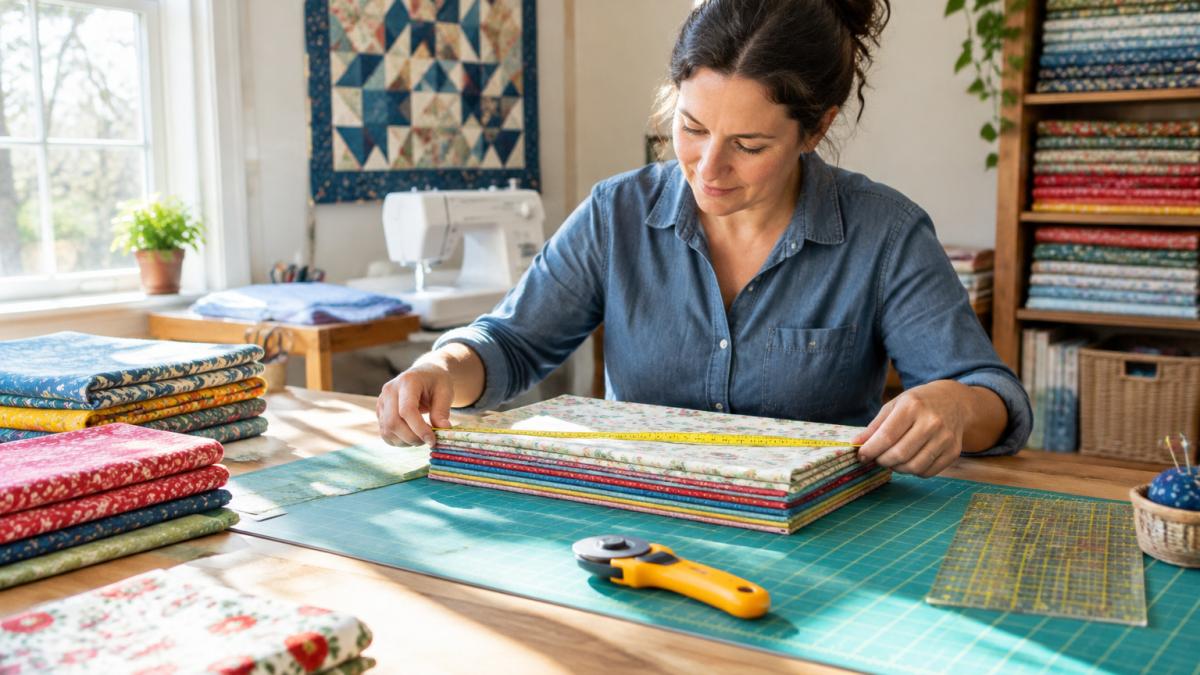
- Add 1/2 inch to each side of every block for seam allowances
- Count how many strips of each size fit across 42 inches
- Divide the total number of strips by strips per yard
- Round up to the nearest eighth of a yard
Many quilters find that Missouri Star Quilt Co.'s yardage guidance offers a helpful way to check these numbers before cutting. Rounding up protects you from running short.
A Queen-sized quilt top typically needs about 9 yards of fabric, according to HC Quilts' yardage benchmarks. Your own pattern may need more or less, so always check the pattern's cutting chart.
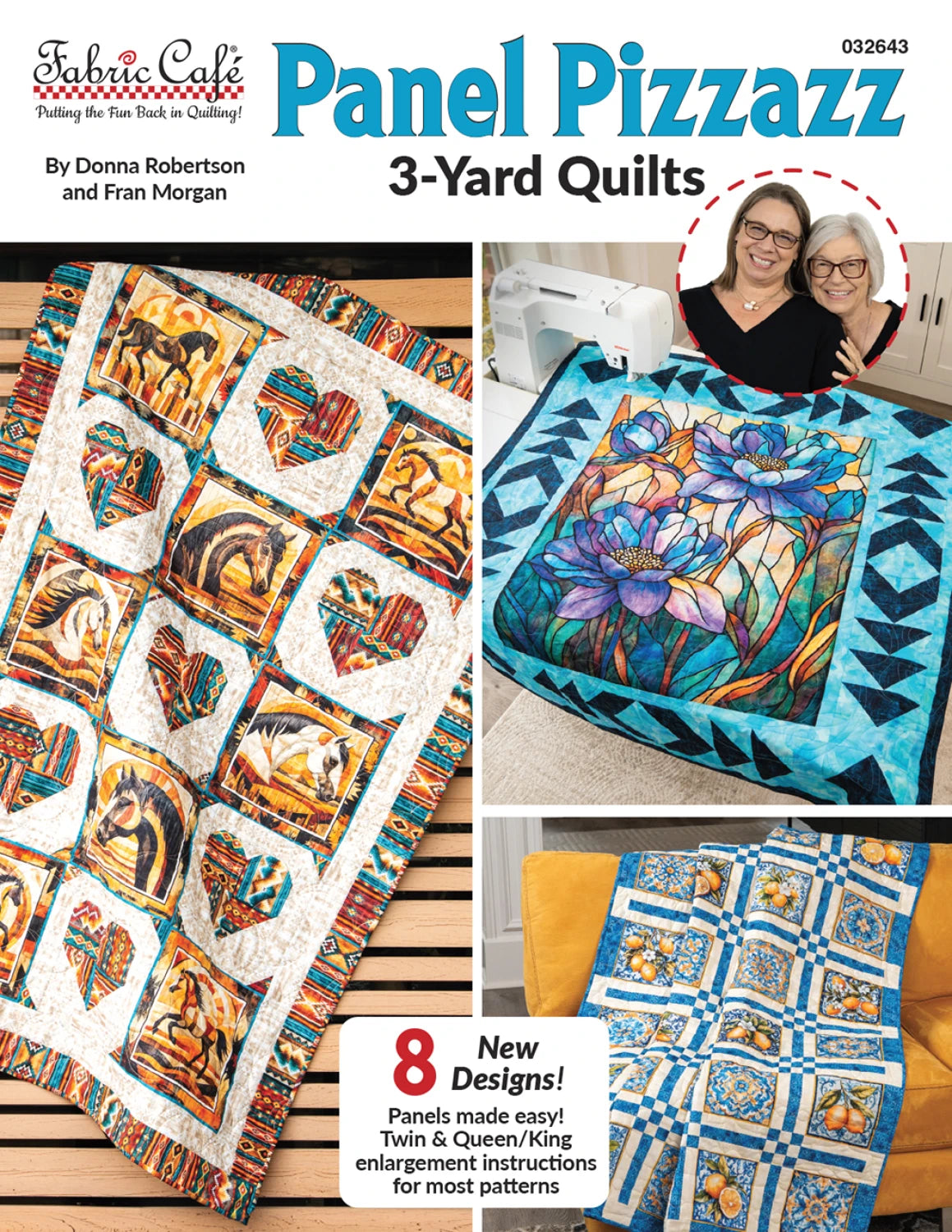
Panel Pizzazz -3 Yard Quilts - Fabric Cafe-8 Designs gives you eight quilt designs built around printed panels and 3-yard layouts.
How to Calculate Quilt Backing Yardage
Backing is usually the simplest part of the calculation, but it still needs care. Add 8 inches to both the length and width of your finished quilt top. This overage gives you room for the quilt to square up on the machine.
A Queen-sized quilt backing typically needs about 7.5 yards, based on HC Quilts' backing benchmarks. Remember that most backing fabric comes in 42 to 44 inch widths, so a wide quilt may need seams to join panels.
Quick backing steps:
- Measure your finished top
- Add 8 inches to each dimension
- Divide the required width by fabric width to find the number of panels
- Multiply the panel length by the number of panels, then divide by 36
Digital tools like Electric Quilt 8 automate these steps, which saves time on larger projects.
Quilt Backing Yardage Chart and Binding Calculator Tips
A quick chart helps you plan faster. Use these common starting points, then adjust for your exact measurements.
| Quilt Size | Top Yardage | Backing Yardage |
|---|---|---|
| Throw | 4 to 5 yards | 3.5 to 4 yards |
| Twin | 6 to 7 yards | 5 to 6 yards |
| Queen | 9 yards | 7.5 yards |
Top Yardage
Binding is usually cut from a separate strip, often about 2.5 inches wide, and needs roughly 1/3 to 1/2 yard for an average quilt. Online calculators, such as the ones from Quilters Paradise, can estimate binding and backing for you.
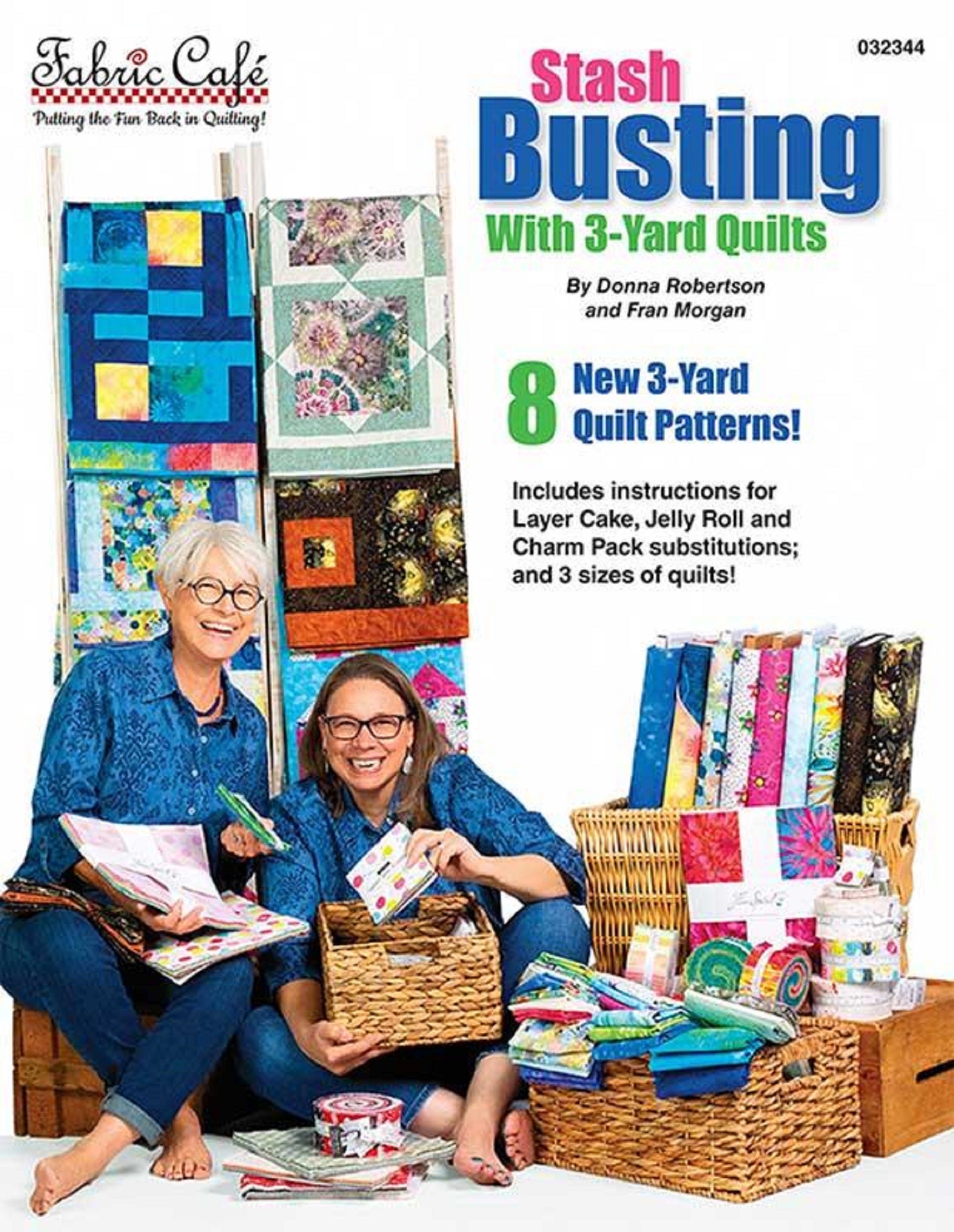
Ready to start? Project Book "Stash Busting With 3-Yard Quilts" by Fabric Café includes eight quilt patterns and instructions for layer cake, jelly roll and charm pack substitutions. Fat Quarter Quilt Treats includes instructions for seven quilts shown in the book.
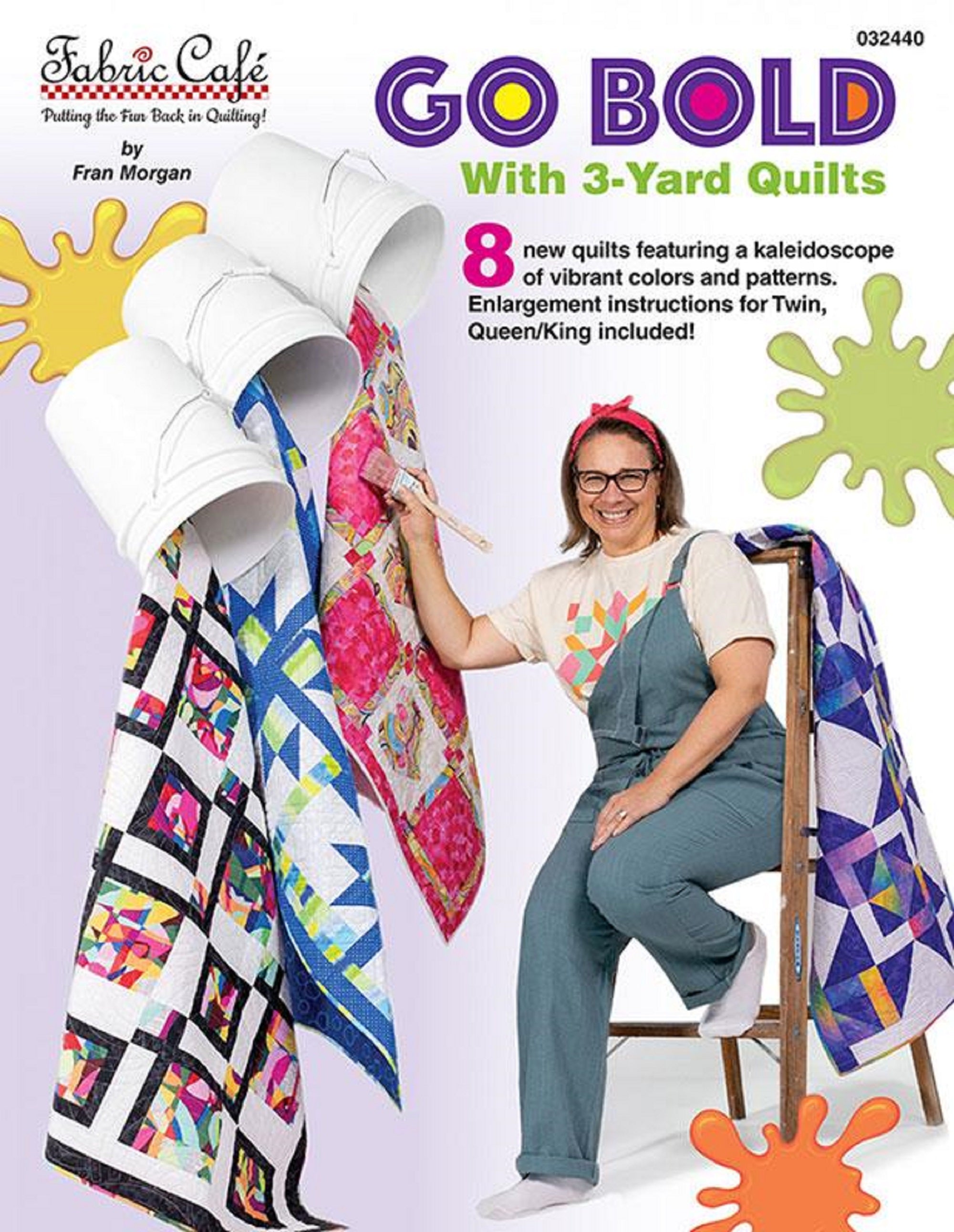
For a go-bold layout, Project Book "Go Bold With 3-Yard Quilts" by Fabric Cafe features eight new quilt patterns with enlargement instructions for twin and queen/king sizes. Shop Now at Platinum So n Sews for the fabrics and patterns to match your next project.
Frequently Asked Questions
How do you calculate fabric yardage for a quilt?
Add up the total length in inches of all pattern pieces you need to cut, then divide by 36 to get yards. Use the usable width of your fabric, typically 42 inches for a standard 42-inch bolt, to figure how many strips or panels fit across a yard. Round up to the nearest eighth of a yard, and add a small overage for shrinkage, pre-washing, and cutting mistakes. Keep notes on each calculation so you can check your math before buying.
How much extra fabric should I buy for a quilt?
Most quilters add a safety margin of about 10 percent to their calculated yardage, which covers shrinkage, directional prints, and cutting errors. Pre-washing can shrink cotton slightly, so buying a little more helps if you plan to wash before cutting. For a fussy-cut design or a print with a large repeat, consider adding even more. Rounding up to the nearest eighth of a yard is a common practice that also helps.
How do I calculate quilt backing yardage with a free quilt fabric calculator?
Start with your finished quilt top dimensions and add 8 inches to both the length and width for the backing. Enter those numbers into a free quilt fabric calculator, which will convert the dimensions into yardage based on your fabric width, typically 42 or 108 inches. A 108-inch wide backing fabric often allows a queen-size quilt back with no seam, which can save fabric and time. Always check the result against your own cutting layout before purchasing.
