

Last Updated: November 18, 2026
Quick Summary
The best quilting fabric brands in 2026 hold their color, keep their hand feel after washing, and stay consistent from bolt to bolt. Premium tiers like Hoffman California Fabrics and Robert Kaufman suit heirloom quilts, while mid-range and budget quilting fabric brands work for everyday and practice projects.
- Kona solids offer an enormous color range, consistent hand feel, and durability through repeated washing.
- Mid-range brands show more shade variation between dye lots, so buy backing and binding with your top fabric.
- Budget fabric has a looser weave and shrinks more, so prewash it before cutting.
- A tight weave shows little light through when you hold the fabric up to a light source.
- Deep reds, saturated blues, and some batiks are the most likely fabrics to bleed.
Table of Contents
- 2026 Quilting Fabric Brands at a Glance
- The Best Quilting Cotton Brands for Every Budget
- Why High-Thread-Count Quilting Cotton Matters
- Modern Quilting Fabric Companies Worth Watching
- How to Choose Quilting Fabric That Holds Up
- Wash Testing, Shrinkage, and Long-Term Durability
- Shop Curated Quilting Fabric Brands at Platinum So n Sews
- Frequently Asked Questions
2026 Quilting Fabric Brands at a Glance
The best quilting fabric brands in 2026 hold their color, keep their hand feel after washing, and stay consistent from bolt to bolt. Brand reputation matters less than how a specific line performs in your quilt. Below, we break down the best quilting fabric brands by budget, explain what thread count and weave mean for durability, and show you how to choose fabric you will still love years from now.
"Best" depends on your project: a wall hanging needs different fabric than a bed quilt washed weekly. Buying purely on print appeal while ignoring weave density is a common mistake, weave determines whether seams hold and colors stay put.
Here is a quick comparison of fabric tiers:
| Brand Tier | Best For | What to Expect | Watch Out For |
|---|---|---|---|
| Premium | Heirloom quilts, frequent washing | Dense weave, strong colorfastness | Higher cost per yard |
| Mid-range | Everyday quilts, gifts | Reliable quality, wide print range | Slight shade variation between bolts |
| Budget | Practice pieces, kids' quilts | Affordable, good for learning | Looser weave, more shrinkage |
The Best Quilting Cotton Brands for Every Budget
Quilting cotton is a plain-weave cotton made for piecing and patchwork, and the best quilting cotton brands balance a tight weave with a soft hand feel. Brand choice comes down to weave tightness, dye retention, and whether you can get more of the same bolt when you run short. We organize this section by budget tier.
Premium Tier: Hoffman California Fabrics and Robert Kaufman
Kona solids are the workhorse of the quilting world: enormous color range, consistent hand feel, and durability through repeated washing. To try a premium solid before committing to a full collection, you can pick up a Kona Cotton Salmon fat quarter and see how it feels against your current stash.
If you are mid-project and need matching yardage, buy the full amount up front.
Mid-Range Tier: Moda Fabrics, Windham Fabrics, and Marcus Fabrics
Mid-range brands deliver dependable quilting cotton at a friendlier price, ideal for everyday quilts, baby blankets, and gifts.
What you give up at this tier is consistency at the margins: shade variation between dye lots is more common, and a collection may sell through before you can reorder backing yardage. Buy backing and binding fabric at the same time as your top fabric.
Budget Tier: Joann Stores' House Lines and Chain Craft Brands
Budget-friendly options can work well for practice piecing and kids' projects, where the quilt will be outgrown before it wears out. The honest limitation is looser weave and more shrinkage, so prewash budget fabric before cutting.
A budget-conscious approach we recommend: buy a fat quarter of a basic line first to test the hand feel. You can browse an affordable Blueprint Basics fat quarter as a low-cost way to compare weave and color against your premium stash. If it passes the weave and colorfastness checks later in this guide, the full bolt is worth the risk.
How to Compare Price per Yard Across Tiers
Price per yard is one way to sort brands, but the number on the bolt is not the whole cost. Budget fabric often needs a prewash and may lose more to shrinkage, so factor that into your total. Price the fabric after prewashing and after accounting for yardage lost to frayed edges; the gap between tiers often narrows once waste is factored in, especially on a large bed quilt.
Availability matters as much as price. Popular prints can sell out before the next collection ships, so check stock before you start a project. If you are matching an existing quilt or finishing a long-term project, favor a brand whose solids are permanent rather than seasonal.
Why High-Thread-Count Quilting Cotton Matters
High-thread-count quilting cotton matters because a denser weave means stronger seams, less fraying, and better color retention over years of use. Thread count refers to the number of threads woven per square inch; a higher count generally signals a tighter, smoother fabric.
That said, thread count is not the whole story. Fabric weight and weave structure matter just as much. A very high count with a loose finish can still fray.
In practice, feel the fabric, not just the label. Premium quilting cottons tend to feel smooth and substantial without stiffness. Cheaper fabric often feels thin or slick, a sign of a looser weave that will fray at the edges.
Modern Quilting Fabric Companies Worth Watching
Modern quilting fabric companies lean toward bold geometric prints, low-volume backgrounds, and curated color palettes that suit contemporary quilt patterns, designing for the modern quilter who wants a coordinated look without hunting through dozens of bolts.
Robert Kaufman's modern lines and batik collections are a strong starting point. If you want to see the style in person, you can order a Scribbles Batik cut and compare it to your current palette.
What separates the best modern brands is print scale. A designer collection often includes the same motif at multiple scales, making it easier to build a quilt with visual variety.
How to Choose Quilting Fabric That Holds Up
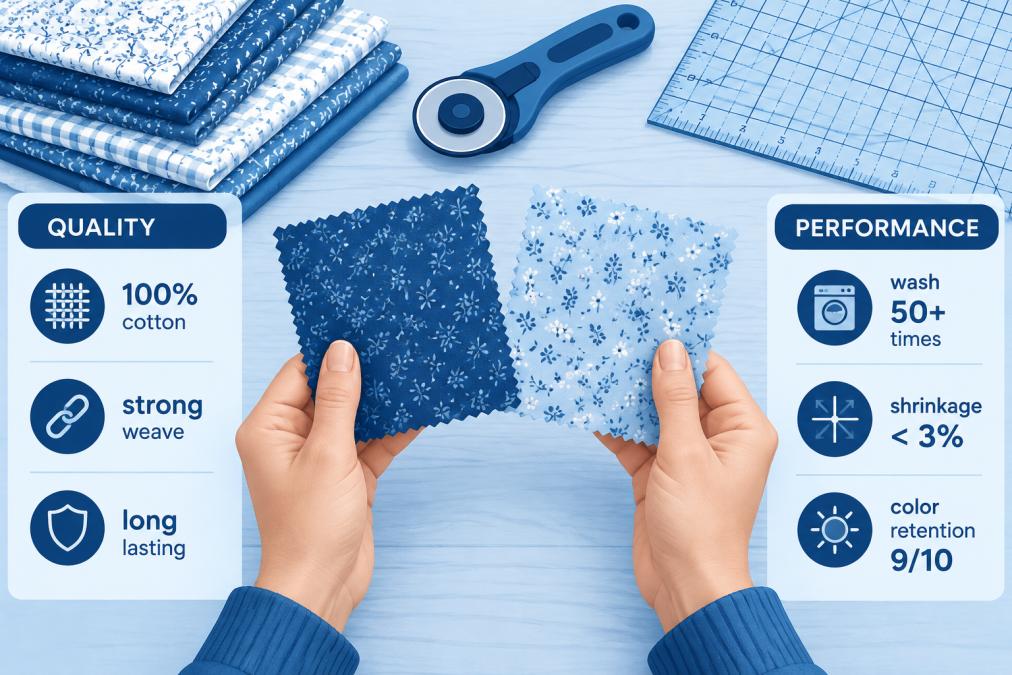
Choosing quilting fabric that holds up comes down to three checks: hand feel, weave density, and colorfastness. Run these tests before you cut, and you will avoid the most common quilting disappointments.
Hand Feel, Weave, and Colorfastness Checks
- Hand feel: Crumple the fabric in your hand. Premium quilting cotton softens and springs back; cheap fabric stays stiff or feels thin.
- Weave check: Hold it up to light. A tight weave shows little light through; a loose weave looks open and grainy.
- Fray test: Rub a cut edge between your fingers. If it sheds threads quickly, expect fraying during piecing.
- Colorfastness: Rub a damp white cloth on a hidden corner. Any color transfer means the dye will bleed in the wash.
- Shrinkage: Prewash a small square and measure before and after. Budget fabric shrinks more than premium lines.
If you are comparing a flannel to a quilting cotton for a specific project, you can buy a flannel cut to test the hand feel against your cotton stash before you commit to a full quilt.
Wash Testing, Shrinkage, and Long-Term Durability
Wash testing is the most reliable way to predict how a quilt will age, and it is the step most guides skip. Quilting cotton shrinks, and how much depends on the weave and the finish. Prewashing removes sizing and lets the fabric shrink before you cut. This section gives you a repeatable test you can run on any brand in an afternoon, plus what the results mean for a finished quilt.
A Repeatable Wash Test You Can Run at Home
Cut a 10-inch square from each fabric you want to compare. Measure and record the length and width to the nearest eighth of an inch. Wash the squares together in warm water with a color catcher, using a normal cycle and your usual detergent. Tumble dry low or line dry, then measure again.
Budget store-brand cottons typically shrink noticeably more than premium lines, and the difference shows up as puckering along seams after the first wash. Run the same test on a premium solid and a budget solid side by side, and you will see the gap in a single afternoon.
Reading Shrinkage Results
Shrinkage is not a defect, it is a property you plan around. If a fabric shrinks more than expected, add that percentage to your cutting measurements before you piece, or prewash the full yardage before cutting. Cutting first and washing the finished quilt turns shrinkage into puckered seams and a quilt that no longer lies flat.
Colorfastness and Bleeding
Colorfastness is the second half of the wash test. Before washing, rub a damp white cloth on a hidden corner of each fabric; any color transfer means the dye will bleed. Then include a color catcher in the test wash and check whether it picks up dye. Deep reds, saturated blues, and some batiks are the most likely to bleed, which is why If a fabric fails the damp-cloth test, wash it separately with a color catcher before it goes near a quilt top.
Long-Term Durability: Thread, Seams, and Washing Frequency
Long-term durability depends on the fabric, the thread, and how often the quilt is washed. Cotton thread that withstands washing keeps seams intact through years of use. If durability is your priority, you can choose a cotton thread built for washing and match it to your fabric weight.
A simple durability check on a finished sample: sew a short seam, wash and dry it five times, and inspect the seam line for fraying or separation. If the seam holds through five cycles, it will likely hold for the life of the quilt.
Shop Curated Quilting Fabric Brands at Platinum So n Sews
Shopping curated quilting fabric brands at Platinum So n Sews means you get fabrics from the industry's trusted names, selected by a team with over 50 years of sewing expertise. We ship with tracking, and orders often go out the same day.
Whether you are a beginner or a seasoned quilter, our team is here to help you choose fabric that suits your project. Browse our collections to find fabrics and patterns for your next quilt.
Fabric choice is the difference between a quilt that lasts and one that disappoints after the first wash.
Frequently Asked Questions
What is the best brand of quilting fabric?
There is no single answer, because the best quilting fabric brands 2026 depends on your project and budget. Compare the quilting cotton brands available to you, and consider how each performs for your project. Compare thread count, hand feel, and colorfastness before committing to yardage for an heirloom quilt.
How can you tell if quilting cotton is good quality?
Check three things: thread count, hand feel, and colorfastness. High-thread-count quilting cotton feels smooth and dense rather than thin or scratchy, and it holds its shape when you tug it gently. Rub a damp white cloth on a fabric corner to check for bleeding, and look for a tight, even weave with no visible gaps. Prewashing a small sample also reveals shrinkage before you cut into your quilt top.
Which quilting fabric brands are best for beginners?
Beginners often find it helpful to start with solids and small-scale prints, which are more forgiving to piece and easier to square up. Save premium high-thread-count quilting cotton for your second or third quilt.
What is the difference between quilting cotton and regular cotton fabric?
Quilting cotton is woven specifically for piecing and patchwork: it has a tighter weave, less stretch, and a crisper hand feel than apparel cotton, so seams press flat and blocks stay square. Regular cotton fabric may be lighter, stretchier, or finished differently, which can cause distortion in a quilt top. For durability and accuracy, choose quilting cotton from a reputable fabric brand rather than substituting apparel yardage.
