

Last Updated: November 22, 2026
Quick Summary
The best beginner quilting patterns use simple shapes like squares, rectangles, and half-square triangles, and are marked beginner or confident beginner. Look for a stated finished size, clear cutting charts, and fabric amounts listed for each size before you buy.
- Choose a pattern marked beginner or confident beginner, and check the fine print on technique and cutting.
- Simple blocks built from squares, rectangles, and half-square triangles let you practice accurate cutting.
- Run free patterns through a five-minute vetting test: stated finished size, fabric by size, cutting chart, seam allowance, and assembly diagrams.
- A quarter-inch presser foot is the single tool that most affects whether your blocks come out the same size.
- Buy one extra fat quarter or quarter-yard of each fabric to cover cutting mistakes.
Table of Contents
- How to Choose a Beginner Quilting Pattern for 2026
- Free Quilting Patterns for Beginners 2026 You Can Start Today
- Quilting Patterns for Beginners 2026 PDF: What to Check Before You Download
- Easy Beginner Quilt Block Patterns and Fabric Quantities
- Beginner Quilting Tools and Supplies, Step by Step
- Booking Your First Quilt: Next Steps at Platinum So n Sews
- Frequently Asked Questions
How to Choose a Beginner Quilting Pattern for 2026
Choosing your first quilting pattern for 2026 is easier than most guides make it sound. Start with one of the beginner quilting patterns marked beginner, make a small project, and finish it.
Skill level comes first. If you want a pattern explicitly marked for beginners to compare against, see Rectangle Retreat, a beginner-skill quilt pattern. A "confident beginner" pattern assumes you can sew a straight seam and press as you go; a "beginner" pattern assumes much less.
Reading Skill Levels and Prerequisites
Pattern makers use skill labels differently, so read the fine print. Look for these details before you buy:
- Technique: Does it use standard machine sewing, or something harder like paper piecing?
- Cutting: Does it call for strips, squares, or fat quarters you can cut quickly?
- Sizes: Multiple sizes usually mean the cutting and assembly steps stay the same.
Watch out: a pattern that looks simple in the photo can hide a tricky step, like matching seams across many blocks.
The Strip Flip Quilt Pattern by Cluck Cluck Sew, $9.95, is a quick, easy project for confident beginners, built from 2 1/2" strips, and it includes directions for five sizes.
Free Quilting Patterns for Beginners 2026 You Can Start Today
Free patterns are a fine way to test whether quilting suits you before spending money on supplies, and 2026 has no shortage of them. If you would rather start with a purchased beginner pattern, an easy beginner quilt pattern is a clear place to begin. The catch is that free patterns vary enormously in clarity, some include full cutting charts, diagrams, and finished-size tables; others skip the steps a first-timer needs.
Where beginner-friendly free patterns actually come from
Rather than chase a single list, look at the four source types that reliably publish beginner patterns each year:
- Fabric manufacturers and shops: Free project sheets tied to current fabric lines, often with yardage for two or three sizes. Well edited, because the shop wants you to buy the fabric.
- Pattern designers' blogs: Free block-of-the-month and quilt-along patterns that build an audience. High quality, but instructions may assume you know terms like "right sides together."
- Quilting guilds and nonprofits: Simple, tested patterns aimed at group sewing, which usually means forgiving construction and clear diagrams.
A five-minute vetting test before you download
Run every free pattern through this test. If it fails two or more items, pick another.
- Finished size is stated in inches for every size offered, not just "lap" or "throw."
- Fabric amounts are listed by size in yards, with backing and binding called out separately.
- A cutting chart exists and matches the diagrams.
- Seam allowance is specified (most pieced quilts use a quarter-inch) and the pattern says whether it is included in the cut sizes.
- Diagrams show assembly order, not just a finished photo.
Watch out: a free pattern that lists fabric in "fat quarters needed" without a finished size is nearly impossible to scale. Convert to yards before you shop.
Adapting a free pattern to what you already own
Treat free patterns as a block recipe rather than a fixed project. If a pattern calls for a layer cake (10-inch squares) and you have fat quarters, you can usually cut the same shapes as long as the piece sizes fit within 18 by 21 inches.
For a first free project, favor patterns built from squares, rectangles, or half-square triangles with no more than two block sizes.
When a paid pattern is the better free alternative
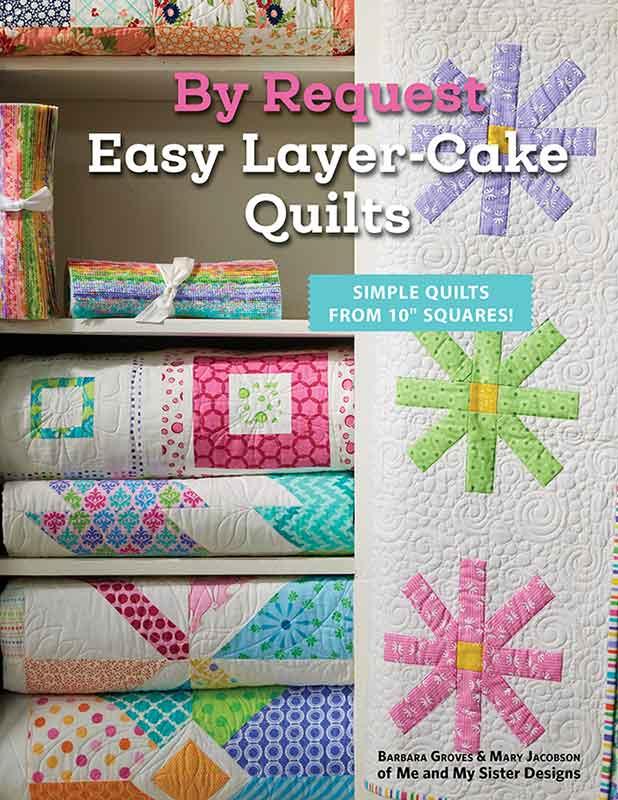
If a free pattern's instructions are thin, the time you spend guessing costs more than a paid pattern. For a quick, simple project, consider a beginner-friendly layer cake quilt pattern. Paid beginner patterns are an option when you want clear instructions with less guesswork. The Thicket Quilt Pattern by Cluck Cluck Sew, $9.95, is built for fat quarters and includes five sizes.
Quilting Patterns for Beginners 2026 PDF: What to Check Before You Download
A PDF pattern is convenient because you can print it right away. Before you download, check the page count, the diagrams, and whether it includes a cutting chart.
Printed paper patterns can be easier to follow than a PDF, since you can fold them and mark them up.
Here is a quick checklist to run through before you buy:
- Skill level is marked beginner or confident beginner
- Finished size matches the project you want
- Cutting instructions are clear and complete
Easy Beginner Quilt Block Patterns and Fabric Quantities
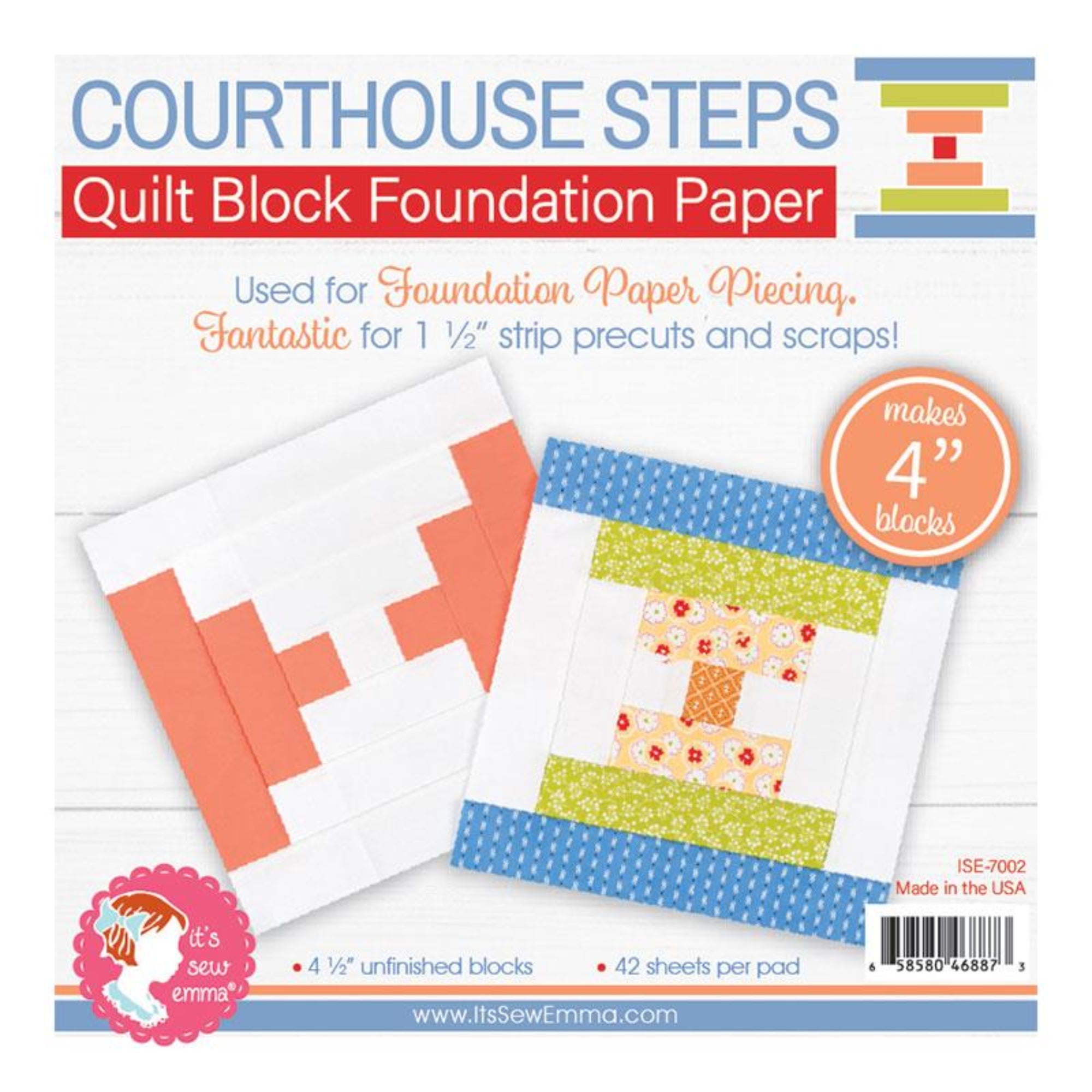
Simple blocks are the best place to start with beginner quilting patterns. Find foundation papers for the Courthouse Steps block if you want to make these simple blocks with precise piecing.
Fabric quantities depend on the size you make, a throw quilt needs far more fabric than a baby quilt. Use the amounts printed in your pattern, and buy a little extra for cutting mistakes.
Beginner Quilting Tools and Supplies, Step by Step
You do not need a full studio to begin, but you do need the right small set of tools, and you need to know how much fabric to buy before you start.
The core tool kit, in the order you will use it
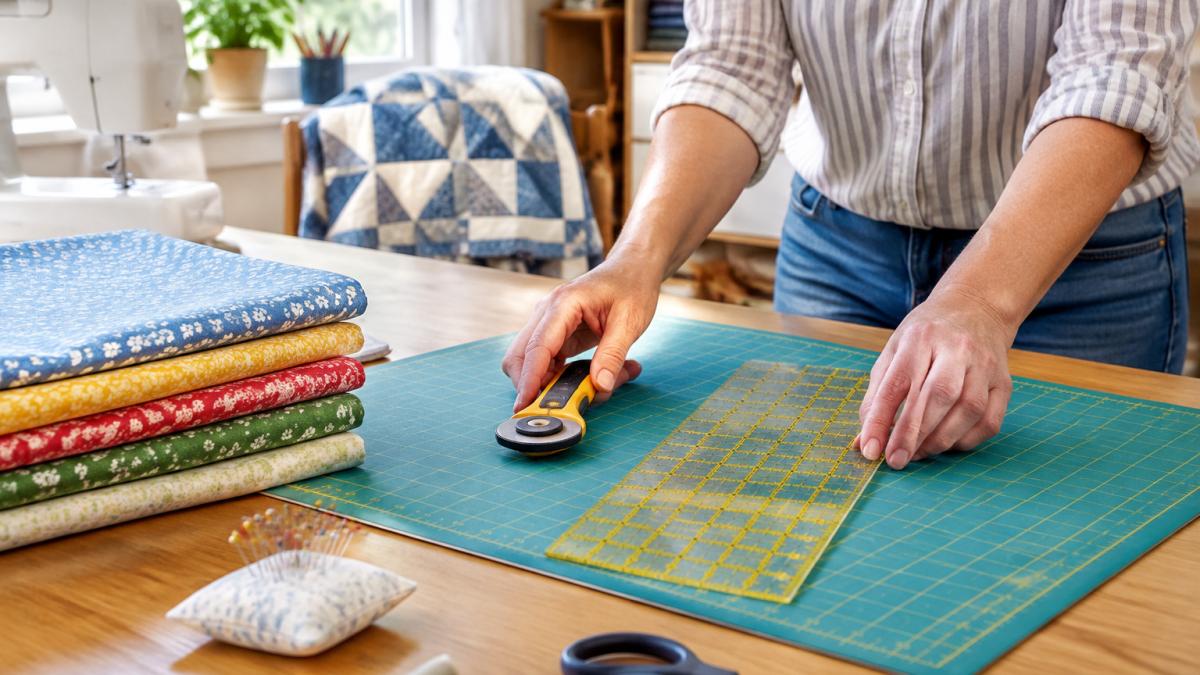
- Cutting mat: An 18-by-24-inch self-healing mat handles most beginner cuts. Larger mats cost more and take more table space; smaller mats force you to reposition fabric, which adds cutting errors.
- Rotary cutter: A 45 mm cutter is the standard beginner size. Keep a spare blade, a dull blade skips and pulls fabric, which is one of the most common causes of inaccurate cuts.
- Quilting ruler: A 6-by-24-inch ruler covers strip cutting and most square cuts. Add a smaller square ruler later for trimming half-square triangles.
- Sewing machine with a quarter-inch foot: This is the single tool that most affects whether your blocks come out the same size. If your machine lacks the foot, mark a quarter-inch guide on the bed with tape and test it.
- Pins or clips: Clips are faster on thick seams; pins give more control on points. Either works.
- Iron and pressing surface: Press after every seam, not just at the end. A small pressing mat next to the machine saves trips and keeps you pressing as you go.
- Thread: A neutral gray or off-white cotton thread blends with most fabrics and hides minor seam wobble.
A realistic budget for a first quilt
Costs vary by fabric choice, but separate one-time tools from per-project fabric. One-time tools, mat, cutter, ruler, quarter-inch foot, pins, and thread, are the larger upfront outlay and last for years.
Buy tools once at the mid-range and spend the savings on fabric you actually like. Cheap rotary cutters and thin mats are the two places beginners most often regret saving money.
Yardage math you can do before you shop
Patterns list fabric amounts, but beginners often want to check the numbers or substitute precuts. Use these rules of thumb, then confirm against your pattern's chart:
- Backing: Measure the finished quilt width and length, add 8 inches to each dimension for overhang and quilting take-up, then divide by 40 inches (usable width of most quilting cotton) to get the number of widths needed. Multiply by the length for total inches, then divide by 36 for yards.
- Binding: Measure the finished perimeter, add 10 inches for corners and joining, and divide by the usable width of your binding strip (typically 40 inches). That gives the number of strips; multiply by strip width and divide by 36 for yards.
- Piecing: Trust the pattern's chart, but buy one extra fat quarter or a quarter-yard of each fabric for cutting mistakes. Beginners miscut; extra fabric is cheaper than reordering a discontinued print.
Watch out: if you substitute a layer cake for yardage, confirm the pattern's largest piece fits inside a 10-inch square. A pattern with 10.5-inch background squares cannot be cut from a layer cake, and beginners often discover this after the bundle is opened.
Machine or hand: choosing your finishing method early
Decide how you will quilt the layers before you buy supplies. Machine quilting with a walking foot is the most common beginner path and requires only the foot and enough throat space to roll the quilt. Hand quilting needs a hoop or frame, hand-quilting needles, and heavier thread, and takes far longer. Tying with yarn is the fastest finish and needs only a large-eye needle.
Three mistakes that show up in the first block
- Skipping the quarter-inch test: Sew a test seam, measure it, and adjust before you sew the first block. Seams that wander even a little make blocks come out uneven.
- Cutting without squaring the fabric: Folded fabric from the bolt is rarely straight. Square one edge before cutting strips, or every strip will be slightly off.
- Pressing instead of ironing: Press the seam down with an up-and-down motion; sliding the iron stretches bias edges and distorts blocks.
The core tools below are listed in the order you will use them, so you know what to buy first.
| Tool | Recommended size | Note |
|---|---|---|
| Cutting mat | 18 by 24 inches | Self-healing; larger mats take more table space |
| Rotary cutter | 45 mm | Keep a spare blade; dull blades skip and pull |
| Quilting ruler | 6 by 24 inches | Covers strip cutting and most square cuts |
| Sewing machine | Quarter-inch foot | Single tool that most affects block accuracy |
| Pins or clips | Either | Clips for thick seams; pins for points |
| Iron and pressing surface | Pressing mat near machine | Press after every seam |
| Thread | Neutral gray or off-white cotton | Blends with most fabrics; hides minor wobble |
Booking Your First Quilt: Next Steps at Platinum So n Sews
Once you have picked a pattern and gathered your tools, the next step is simply to start. Choose one beginner pattern, cut your fabric, and sew your first block this week.
At Platinum So n Sews, you can find our full range of beginner quilt patterns, fabrics, and notions in one place. Our orders ship with tracking numbers.
Shop Now: Find your first beginner quilting pattern at Platinum So n Sews today.
Frequently Asked Questions
What is the easiest beginner quilt pattern?
Strip-based patterns are generally the easiest starting point because they rely on straight cuts and simple piecing rather than precise curves or small seam intersections. Strip Flip from Cluck Cluck Sew, listed at $9.95 on Platinum So n Sews, is a beginner-friendly choice that includes directions for five sizes and works well with 2 1/2-inch strips or yardage. Start with a small size, such as a baby or lap quilt, so you can finish the project and learn the process before attempting a larger bed-sized quilt.
Where can I find free beginner quilting patterns for 2026 as a PDF?
Many quilt designers and independent pattern shops offer free beginner patterns as downloadable PDFs, often as a promotional download or a sample from a larger collection. Before you download, check that the pattern lists a beginner skill level, includes cutting instructions with fabric quantities, and states the finished size. Paid printed or PDF patterns, such as Thicket by Cluck Cluck Sew at $9.95, often include more detailed instructions and multiple size options, which can be useful for a first project.
What supplies do beginners need to make a quilt?
A first quilt typically requires a sewing machine with a straight stitch, a 1/4-inch presser foot, a rotary cutter, a self-healing cutting mat, a quilting ruler, sharp fabric scissors, and pins or clips. You will also need quilting cotton, batting and thread matched to your project. Buy one good cutting mat and ruler before buying additional fabric, since accurate cutting makes the biggest difference to how well your blocks line up.
How do I choose fabric for my first quilt?
Choose 100 percent quilting cotton in a limited palette of three to five colors, and prewash it to prevent shrinkage later. Fat quarters and pre-cut strips are convenient for patterns designed around them, such as Lucky Stars from Atkinson Designs at $11.95, which uses fat quarter pieces to create star blocks. If you are unsure about color, ask for guidance before you buy, since coordinated fabric collections make planning easier for beginners.
